Baseball
First swings on the tee: hanging ball, standing tee or pitcher
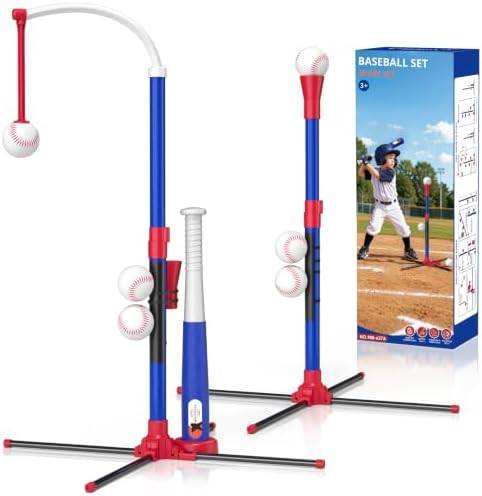
Nobody starts by hitting a thrown ball. The whole point of a first baseball set is to take the throw out of the game, hold the ball still or predictable, and let the swing be the only new thing. We build three kinds of machine for that job, and they are less interchangeable than they look.
The hanging ball
A ball on a cord, swinging from an arm above head height. Miss it and it comes back by itself, which is the entire trick: no chasing, no re-setting, no adult bent over a tee forty times an hour. The ball travels, so the eye has to track it, and that makes the hanging style a small step harder than a tee and a big step more entertaining. It suits a kid who already connects sometimes and gets bored resetting.
The standing tee
The classic. The ball sits still on a post, usually height adjustable, and the batter owns every variable. This is the calmest way in for a two or three year old, because a still ball forgives a slow wind-up. The cost is the reset: somebody puts the ball back after every swing, and for the first weeks that somebody is you. The oversized bats these sets come with are wide on purpose, so early contact happens often enough to keep the batter interested.
The auto pitcher
A machine that lobs a soft ball up in a gentle arc every few seconds. It sits between the other two: the ball moves like a real pitch, but the same way every time, so the swing can be rehearsed against it. Pitchers earn their keep with kids around five and up who have outgrown the tee and want the game to feel like the one on TV. They also run on batteries, which the tees do not, so a pitcher is the one machine in this section that can go quiet mid-inning.
Reading the kid, not the box
- If every miss ends in frustration, go stiller. A tee gives more contact per afternoon than anything that moves.
- If every reset ends the game, go hanging. The cord does the fetching.
- If the swing already lands and the tee feels babyish, the pitcher is the promotion.
- Whatever the machine, the ball is soft and the bat is light. These sets are built for living rooms and short grass, not for the bleachers.
Most families end up owning two of the three, a still one for learning and a moving one for playing. The sets below are the ones parents rate highest in our lineup.